
Town of Saratoga, Wisconsin
 
Home Page
 

Town of Saratoga in Wisconsin

Description
Term: Saratoga, Town of, Wood Co.
Definition: A civil town in Wood Co. at latitude 441733N and longitude 0894839W, created 9 Jan. 1857.

Possible Origin of Name
Organized as a township on January 9, 1857 and reduced to its present size in 1875, it was named after the Saratoga settlement, originally called Ten Mile Creek for the nearby stream. Origin of the name Saratoga is unknown. It may have been named for another place in the United States named Saratoga.

In the 1830s and 1840s, many English and Irish emigrants were arriving in central WI from the state of New York. As they settled here, they named the towns after those they left in New York: Hancock, Almond and Plainfield among them. Some of these same emigrants then made their way into this immediate area, and quite possibly brought the name of Saratoga with them from NY as well. As you will see below, the name is very fitting for this township here. Also note under "First Settlers" section below, that the names indicate almost all are of English and Irish descent.

Saratoga New York was a gateway for westward migration of local and New England settlers. The name Saratoga in New York came from the Native American Iroquois name for the place: Sarach-togue, meaning "hillside of a great river; place of swift water."

Establishment of the Township of Saratoga
Wood County was named after Joseph Wood, who came here from Illinois in 1848.
The township of Saratoga was carved out of Wood County and set aside Jan. 9, 1857. The description reads: "All that portion of the County of Wood lying east of the main channel of the Wisconsin River and south of the township line between Townships 21 and 22".
Even though established as a town in 1857, the first town meeting was not held until the first Tuesday in April, 1858. That meeting was held at the tavern then kept by Henry Kennedy within the limits of the new town.

The boundaries of the town as first established have remained the same except that from Mar. 30, 1874, to Mar. 20, 1875, the portion of Town 21, Range 5 lying west of the Wisconsin River was a part of Saratoga, having been detached from Port Edwards for that period of time, and then returned.

Early History of Town Government
On April 23, 1863, the commissioner system of county government having been adopted in the previous year, the board divided the county into three districts, with District No. 1 to be composed of Grand Rapids and Saratoga. For seven years this is how it was done and then in March, 1870, the supervisor system of county government was resumed by the state, with each township having its representative on the board.

The earliest records found in the town archives themselves only date back to 1880. Those records hold little information on how the meetings were conducted and the meetings seem to be held at a variety of places from the local school, to homes of members.

The early board members were chosen by various methods also but the same names appear over and over as Chairman, Clerk, Treasurer and other positions, including among others, Inart Einertson, Peter Johnson, John Chrystal, Peter McDonald, Edgar Elliot, Harman Ross, Andrew Marr, Peter Mullen, Charles W. Christianson (first listed town clerk), John Finley, Francis Finley, Robert Turley, Peter Knudtson, Frank Ross, and Michael Matthews.

Settlement of Saratoga
Town 21, Range 6 (east portion of Saratoga). The first land taken up in this town was in Section 32, being filed on in 1852 by Joseph R. Patte. In 1853, Edward I. Scott took up land in Section 25, and in 1854 Joseph Wood, founder of the county, filed in Section 5, the area where the Five Mile Creek crosses Highway 13. In 1855 John Snyder filed in Section 3; Stephen Snyder in Sections 4 and 5; John Hannan in Sections 5, 8, and 19; John McCamley in Section 6; Hugh Turley in Section 7; Patrick Mullen in Section 7; Henry Larsen in Section 7; Michael Flanagan in Section 7; Michael Craney in Section 7; Almanson Eaton in Sections 8 and 9; Parley Eaton in Section 8; Michael McDonald in Section 8; Robert Turley in Sections 8 and 19; Michael Mathews in Section 17; Miles McKew in Section 7; Patrick Crangle in Section 18; Robert Jones in Section 20; John Welsh in Section 20; Winefred Holland in Sections 21 and 29; Bishop Fuller in Section 29; John Douglass in Section 29; Samuel Lewis in Section 29; Freeman Durrell in Section 30; Andrew Warren Jr. in Section 32; John Rategan in Section 32; and Horace W. Coon in Section 32.

Extinction of Town Itself
Saratoga is an extinct village in southeastern Wood County, in a township of the same name. The early settlement was largely of Irish extraction, and the present population is entirely rural. The town of Saratoga was located at the southern end of the township, on Highway 13 South, near the Ten Mile Creek.

Lakes in the Township of Saratoga
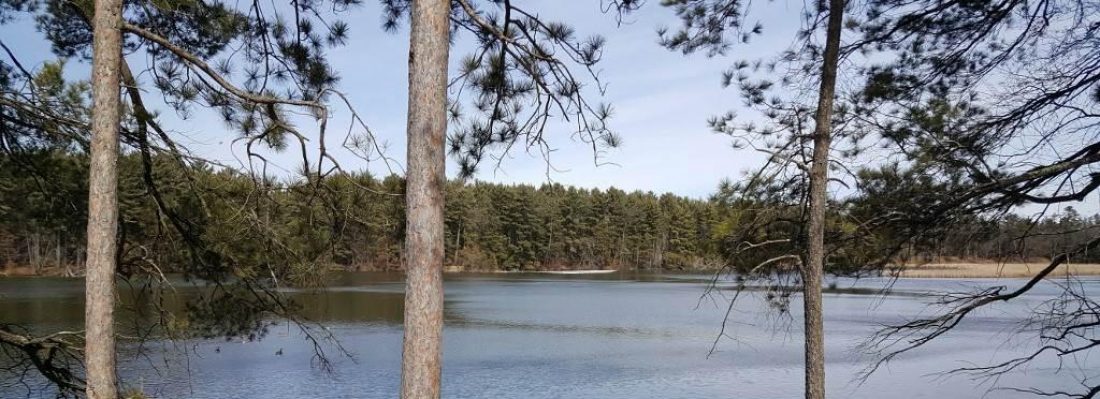
There are several marshes in the area, most used for growing cranberries, but the only true “lake” is Ross Lake, which is just west of County Trunk Highway Z in Section 27 of the township. Ross Lake was named for the first family who owned the land.
A very small section of NEPCO Lake extends into Saratoga, east of County Trunk Z and North of the Five Mile Creek.

Connection with the Native Americans
The Ross Lake Indian mounds near the east bank of the Wisconsin River are situated near Ross Lake about one mile east of the Wisconsin River, overlooking the lake on the original Frank Ross farm. More mounds exist further south along the east side of the river, all the way to Adams County. These mounds are indicative of a history of Native American settlement in this area.

Industry and Business in the early town
Robert Wakely was the first white settler in the town, arriving in 1837. By 1846, Wakely already had at least a dozen buildings at his settlement. By 1852, Wakley was operating the ferry across the Wisconsin River from his tavern. All this was even before the township was created in 1857.

Early records indicate taverns being kept by several individuals in the area, these being necessary for travelers who needed to stop.

According to one local history book, the first post office was in a home at the original Ten Mile settlement founded on the banks of the Ten Mile creek at a point where Highway 73 crosses the creek.  Early settlers attracted by the white pines erected two stores, the boarding houses (taverns), a blacksmith shop and twenty houses. A dam was also constructed to furnish power for a sawmill. 

Another source states that that the settlement was on Highway 13 which has caused some confusion, but it should be noted that in earlier days of the county, Highway 13 came through Nekoosa and followed south on what is now County Trunk Highway Z.

A plat map from the early 1900s shows 160 acres owned by the Grand Rapids Brew Company, located on the south side of Mill Avenue, just east of modern-day Highway 13, and Mrs. M. Mathews 160 acre Grove View Stock Farm straddled Highway 13, on the south side of the intersection with Highway 73.

Cemeteries
Pioneer Cemetery is located at the corner of 48th Street and Townline Road in the northeast corner of the Township. Contact person for the Pioneer Cemetery is Helen Sparks at 715/424-2545.

Greenhill Cemetery is located in the southwest corner of the Township just east of County Trunk Z, ten miles south of Nekoosa. Contact person for Greenhill Cemetery is Emily Henke at 715/886-4698.

The Pattee Cemetery and other old farm cemeteries and single-grave sites also exist.

Interesting Notes from the Early Town Records
April 3, 1888 – exactly as written:
Moved and caried that the Town Boards Report by excepted.
Moved and caried that there by $250 dolards raised for town expences
April 1890:
Motioned and seconded that all cattle be let run at large.

Nov 3, 1893
Saratoga Wood County WI
On section 14, Town 21, R.5
Notice is hereby given by the undersigned that on the 3 day of November there strayed on to me a black boar hog weighing about 200 pound. Also one back sow. Also one black sow with some small spots of white weighing about 200 pounds each. Of which I have shut in a pen holding fore fine and damages. I also require owner to prove property and pay damages and take them away.
George W. Nutter

Example of Early Town Road Building Process
October 31, 1893
Town of Saratoga
County of Wood, Wis

Building the Wakely Road
The Board of Supervisors of said Town of Saratoga met at N L Wakley's according to notice and let the job of building a road commencing at Jos Berard's barn on Section 23, T 21, Route 5, and running north on the section line one mile. And work to be done as follows. Commence at Jos Berard's to put in pipe and grade 16 feet wide. Next, N L Wakely to build a bridge 5 ft abutment, 10 ft span. 16 ft planks. 3 in wide with railing 5 stringers and to be made of good sound and good size and solid timber. All peeled and grade level with the bridge and fill all holes and grade all side hills in good passable manner. All brush to be cut close to the ground. 3 Road wide as far north as the center line of section 14. Said work to be paid when money is collected and sold to Robert Wakely for $75. –T.C. Thompson, Clerk

Saratoga Sites on the National Historic Registry
Currently the Wakley House is the only building in the township of Saratoga on the NHR. The application for placement on the registry and the actual listing reads as follows:
Wakely's Tavern (Added 1974 - Building - #74000146)
Also known as Old Ferry Farm
West end of Wakely Rd., Nekoosa
Historic Significance: Event
Area of Significance: Transportation, Exploration/Settlement
Period of Significance: 1825-1849
Owner: Private
Historic Function: Commerce/Trade, Domestic
Historic Sub-function: Department Store, Hotel
Current Function: Domestic
Current Sub-function: Single Dwelling

Wakely Bridge is also listed on the National Historic Registry:

Wakely Road Bridge (Added 2001 - Structure - #01000345)
Also known as Point Basse Bridge
Wakely Road over Wakely Creek, Saratoga
Historic Significance: Architecture/Engineering
Architectural Style: Other
Area of Significance: Engineering
Period of Significance: 1875-1899
Owner: Local Government
Historic Function: Transportation
Historic Sub-function: Road-Related
Current Function: Transportation
Current Sub-function: Road-Related

I have compiled this town history as a glimpse into our past for it is only by understanding our past that we can build for our future. As Walt Whitman, great poet of the 1800s said, “The past–the infinite greatness of the past! For what is the present after all but a growth out of the past.”

–Rhonda Whetstone Neibauer

Endnotes:

All spellings of names and incidents taken from other sources are spelled exactly as shown in those sources.

  1. Harrsch, Patricia G. Civil Towns of Wisconsin (Madison: State Historical Society of Wisconsin Library, 1998), and U.S. Geographic Names Information Server
  2. HOWGS webpage howgs.org/wood_county_history
  3. Lakin Family History/Rhonda Whetstone Neibauer
  4. Saratoga County Heritage, Violet B. Dunn, Ed., 1974.
  5. History of Wood County (1923) Chapter VIII County and Town Organization
  6. Ibid
  7. Saratoga Town Clerks Record Book 1887-1893
  8. History of Wood County (1923) page 73
  9. Early Railroad Survey A Preliminary Railroad Survey in Wisconsin, 1857 (page 166) By Andrew McFarland Davis, A.M.; Vanished Settlements Saratoga (Ten Mile Creek).
    Heart of Wisconsin Genealogical Society (HOWGS) howgs.org/wood_county_history.htm#saratoga
  10. Saratoga Township Record Books
  11. Ibid
  12. nationalregisterofhistoricplaces.com/WI/Wood/state.html
  13. Ibid
  14. Walt Whitman, Leaves of Grass
  15. Rhonda Whetstone Neibauer is a freelance writer, local historian and life-long resident of the Township of Saratoga.
    Webpage: www.RhondaWhetstone.com
    Email: Rhonda@RhondaWhetstone.com

Town Stories (click title)

Wakely Bridge History

Saratoga

Gray Dynasty


Telephone: 715-325-5204
All rights reserved. © The Town of Saratoga, Wisconsin
Designed and Powered by Web Monger